












Ramses II (flourished 13th century BCE) was the third king of the 19th dynasty (1292–1191 BCE) of ancient Egypt whose reign (1279–1213 BCE) was the second longest in Egyptian history.
In addition to his wars with the Hittites and Libyans, he is known for his extensive building programs and for the many colossal statues of him found all over Egypt.

As per the latest development, archaeologists have discovered the upper segment of an enormous statue featuring the ancient Egyptian pharaoh Ramesses II.
Reports have it that it has been unearthed in the vicinity of the ancient city of Hermopolis (modern-day el-Ashmunein), approximately 155 miles (250 kilometers) south of Cairo.
Standing at an impressive height of about 12.5 ft (3.8 m), the stone artifact supposedly portrays Ramesses II, who reigned around 1279 to 1213 BC, adorned with a double crown and a headdress crowned with a royal cobra, as detailed in a statement by the Egyptian Ministry of Tourism and Antiquities.

The back of the statue is adorned with hieroglyphs that indicated detailing of the various titles of the king, contributing to the glorification of Ramesses II, as elucidated in the statement.
Remarkably, the lower part of the statue had been discovered in 1930 by German archaeologist Günther Roeder. When united, the complete statue would have towered at a height of about 23 ft (7 m), the statement revealed.

Background and early Years of Reign
Ramses’ family, of non-royal origin, came to power some decades after the reign of the religious reformer Akhenaton (Amenhotep IV, 1353–36 BCE) and set about restoring Egyptian power in Asia, which had declined under Akhenaton and his successor, Tutankhamen.
Ramses’ father, Seti I, subdued a number of rebellious princes in Palestine and southern Syria and waged war on the Hittites of Anatolia in order to recover those provinces in the north that during the recent troubles had passed from Egyptian to Hittite control.
Seti achieved some success against the Hittites at first, but his gains were only temporary, for at the end of his reign the enemy was firmly established on the Orontes River at Kadesh, a strong fortress defended by the river, which became the key to their southern frontier.

During his reign Seti gave the crown prince Ramses, the future Ramses II, a special status as regent.
Seti provided him with a kingly household and harem, and the young prince accompanied his father on his campaigns, so that when he came to sole rule he already had experience of kingship and of war.
It is noteworthy that Ramses was designated as successor at an unusually young age, as if to ensure that he would in fact succeed to the throne.

He ranked as a captain of the army while still only 10 years old; at that age his rank must surely have been honorific, though he may well have been receiving military training.
Because his family’s home was in the Nile River delta, and in order to have a convenient base for campaigns in Asia, Ramses built for himself a full-scale residence city called Per Ramessu (House of Ramses; biblical Raamses), which was famous for its beautiful layout, with gardens, orchards, and pleasant waters.
Each of its four quarters had its own presiding deity: Amon in the west, Seth in the south, the royal cobra goddess, Wadjet, in the north, and, significantly, the Syrian goddess Astarte in the east.

A vogue for Asian deities had grown up in Egypt, and Ramses himself had distinct leanings in that direction.
The first public act of Ramses after his accession to sole rule was to visit Thebes, the southern capital, for the great religious festival of Opet, when the god Amon of Karnak made a state visit in his ceremonial barge to the Temple of Luxor.
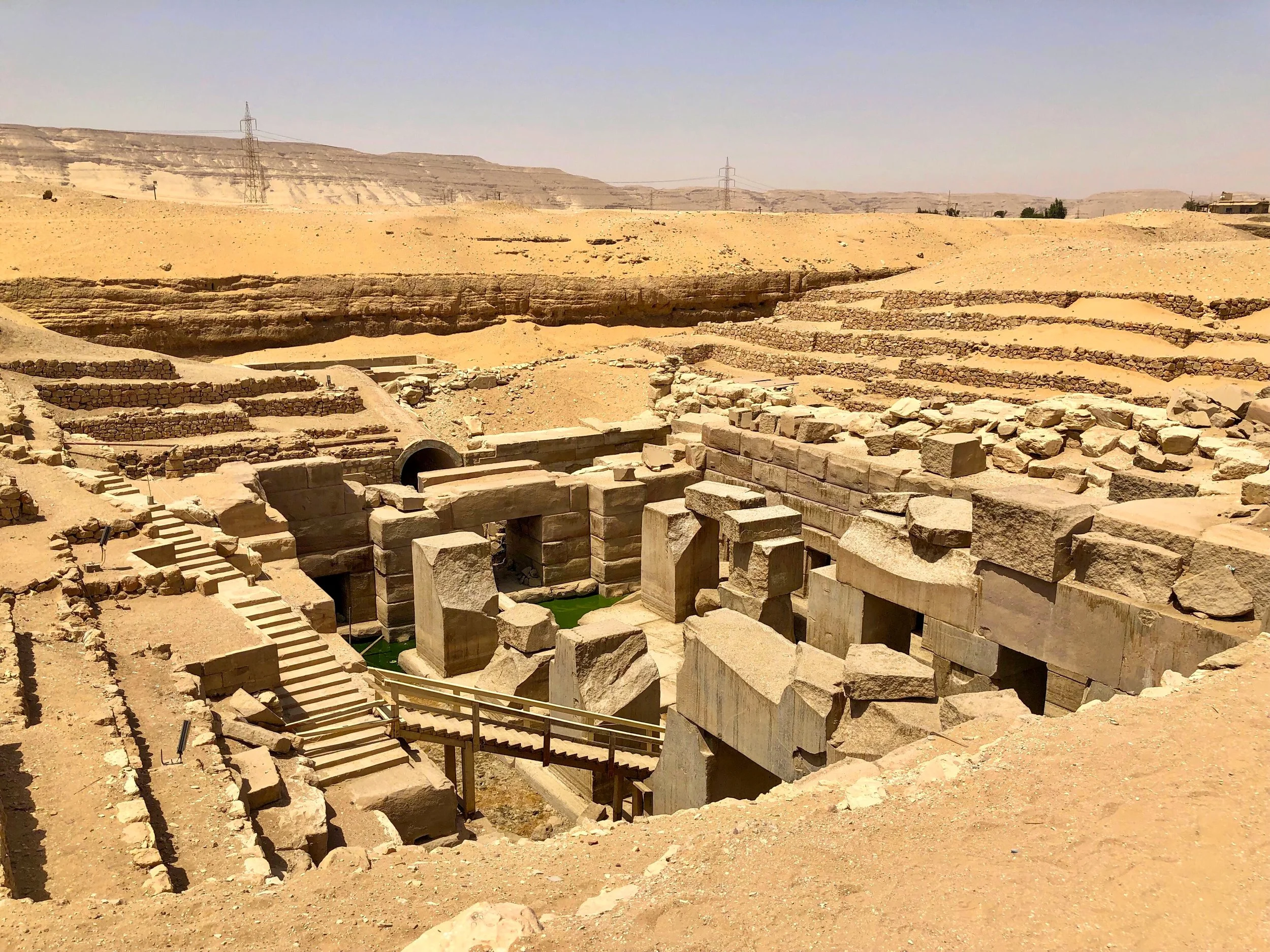
When returning to his home in the north, the king broke his journey at Abydos to worship Osiris and to arrange for the resumption of work on the great temple founded there by his father, which had been interrupted by the old king’s death.
He also took the opportunity to appoint as the new high priest of Amon at Thebes a man named Nebwenenef, high priest of Anhur at nearby This (Thinis).
Prosperity during the reign of Ramses II
One measure of Egypt’s prosperity is the amount of temple building the kings could afford to carry out, and on that basis the reign of Ramses II is the most notable in Egyptian history, even making allowance for its great length.
It was that, combined with his prowess in war as depicted in the temples, that led the Egyptologists of the 19th century to dub him “The Great,” and that, in effect, is how his subjects and posterity viewed him; to them he was the king par excellence.
Nine kings of the 20th dynasty (c. 1190–c. 1077 bce) called themselves by his name; even in the period of decline that followed, it was an honor to be able to claim descent from him, and his subjects called him by the affectionate abbreviation Sese.
In Egypt he completed the great hypostyle hall at Karnak (Thebes) and continued work on the temple built by Seti I at Abydos, both of which were left incomplete at the latter’s death.
Ramses also completed his father’s funerary temple on the west bank of the Nile at Luxor (Thebes) and built one for himself, which is now known as the Ramesseum.
At Abydos he built a temple of his own not far from that of his father; there were also the four major temples in his residence city, not to mention lesser shrines.


In Nubia (Nilotic Sudan) he constructed no fewer than six temples, of which the two carved out of a cliffside at Abu Simbel, with their four colossal statues of the king, are the most magnificent and the best known.
The larger of the two was begun under Seti I but was largely executed by Ramses, while the other was entirely due to Ramses.
In addition to the construction of Per Ramessu, his most notable secular work so far as is known included the sinking of a well in the eastern desert on the route to the Nubian gold mines.

Of Ramses’ personal life virtually nothing is known. His first and perhaps favorite queen was Nefertari; the smaller temple at Abu Simbel was dedicated to her.
She seems to have died comparatively early in the reign, and her fine tomb in the Valley of the Queens at Thebes is well known.
Other queens whose names are preserved were Isinofre, who bore the king four sons, among whom was Ramses’ eventual successor, Merneptah; Merytamun; and Matnefrure, the Hittite princess.

In addition to the official queen or queens, the king possessed a large harem, as was customary, and he took pride in his great family of well over 100 children.
The best portrait of Ramses II is a fine statue of him as a young man, now in the Egyptian Museum of Turin; his mummy, preserved in the Egyptian Museum at Cairo, is that of a very old man with a long narrow face, prominent nose, and massive jaw.
The reign of Ramses II marks the last peak of Egypt’s imperial power.

After his death Egypt was forced on the defensive but managed to maintain its suzerainty over Palestine and the adjacent territories until the later part of the 20th dynasty, when the migration of militant Sea Peoples into the Levant ended Egypt’s power beyond its borders.
Ramses II must have been a good soldier, despite the fiasco of Kadesh, or else he would not have been able to penetrate so far into the Hittite empire as he did in the following years; he appears to have been a competent administrator, since the country was prosperous, and he was certainly a popular king.
Some of his fame, however, must surely be put down to his flair for publicity: his name and the record of his feats on the field of battle were found everywhere in Egypt and Nubia.
Britannica / ABC Flash Point News 2024.


Together with the Yellow Emperor, one the foundations of ancient civilizations?