



This month, Naval News reported that the Australian government has designated the Collins class conventional submarine sustainment program as a product of concern, following a Defense Australia recommendation to enhance ministerial oversight of this critical capability.
Australia’s submarine plans are slipping due to aging Collins-class vessels and AUKUS uncertainties, forcing tough decisions on its future underwater warfare capabilities.
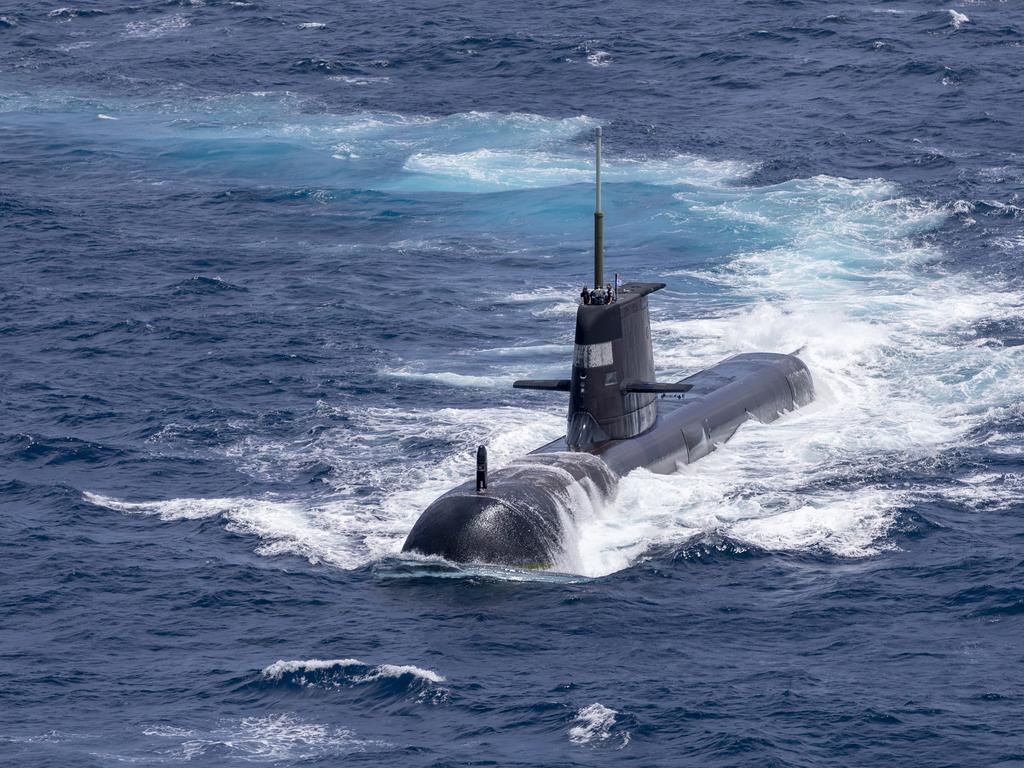
Naval News says this announcement underscores the challenges faced in extending the operational life of these submarines beyond their original design.
It mentions that the Albanese Government is committed to investing AUD 4 to 5 billion (US$2.56-3.2 billion) over the next decade to ensure the Collins class remains effective until its planned withdrawal in the 2030’s.
The report notes that this effort includes a new AUD 2.2 billion sustainment contract with the Australian Shipbuilding Company, signed in June 2024.


This contract replaces the previous one, which included an AUD 120 million efficiency dividend under the former coalition government.
Naval News mentions that the Collins class has experienced significant issues, including unprecedented levels of corrosion, necessitating comprehensive remediation measures.
It says the product of concern designation aims to address these challenges through enhanced oversight and a planned summit in early 2025.

The report says this initiative is part of a broader effort to maintain Australia’s maritime security and ensure no capability gap until the transition to conventionally armed, nuclear-powered submarines is complete.
Underscoring the gravity of the problem, Australian Broadcasting Corporation News reported in November 2024 that the Royal Australian Navy is grappling with a significant operational challenge.
The report says the navy currently has only one fully operational submarine from its fleet of six Collins-class vessels.

According to ABC News, this situation arises due to urgent repairs and scheduled upgrades required for the aging fleet, which has been plagued by unprecedented hull corrosion.
The report says two submarines are stationed at Adelaide’s Osborne shipyard, where worker strikes are causing delays in their extensive maintenance, known as full-cycle docking.
Further, the report mentions three submarines are at Western Australia’s Garden Island naval base, with at least one awaiting certification to return to service.

Despite these challenges, ABC News maintains that Defense Australia can meet government-directed operational availability levels, although specific submarines’ precise locations and availability remain undisclosed for security reasons.
While Australia may hope to acquire nuclear attack submarines (SSNs) under the AUKUS framework to restore its underwater warfare capabilities, that prospect faces an uncertain future.
Asia Times mentioned this month that Australia’s nuclear submarine ambitions under the AUKUS security pact face significant challenges due to a weak production base, uncertainties from a second Trump administration and reluctance to share nuclear technology.

A recent US Congressional Research Service (CRS) report suggests that US SSN’s could perform Australian and US missions in the region in lieu of Canberra’s acquiring nuclear attack submarines (SSN’s) under AUKUS.
This arrangement would be similar to existing ones between the US and its NATO allies. The report outlines alternative plans, including forward rotations of USA and UK SSN’s to Australia and reinvesting funds intended for SSNs into other military assets.
The report warns that if Australia’s SSN plans reach a cost-accounting death spiral, it could reduce funding for other military capabilities, impacting deterrence against China.


Critics argue that the AUKUS SSN project lacks a clear strategic rationale and that Australia should leverage its distance from China instead of projecting military power into China’s near seas.
US President-elect Donald Trump’s return to the White House raises concerns about the future of AUKUS, with potential demands for increased Australian contributions. Further, Australia’s reluctance to cooperate on nuclear power complicates its SSN ambitions.
Given Australia’s looming underwater warfare capability gap and the unclear future of AUKUS, Australia may have to reconsider acquiring SSN’s from an alternative source.


In an article for the Strategist this month, Peter Briggs argues that Australia should prepare to acquire at least 12 French Suffren-class SSN’s, as the current AUKUS plan for eight SSN’s faces increasing risks.
Briggs points out that the AUKUS plan, which includes three US-built and five British-built SSN’s, is unlikely to meet deadlines due to production delays and design challenges.
He says that the Australian Government, elected next year, should decide by 2026 whether to switch to the French design to ensure deliveries by 2038.

He mentions that the Suffren class, already in service with the French Navy, offers a more feasible solution with its 5,300-ton displacement, 70-day endurance, and 60-person crew.
According to him, this design is optimized for anti-submarine warfare and the vessel can carry missiles and special forces.
Briggs says the AUKUS SSN plan’s mixed designs and oversized UK submarines, driven by reactor dimensions, are unsuitable for Australia’s needs and pose significant crew and cost challenges.

He adds that USA and UK submarine production issues further complicate the AUKUS plan, making the French Suffren class a more practical and affordable alternative.
He says this shift would allow Australia to maintain its SSN training programs with the US and UK while establishing a joint construction program with France to address its maritime security needs.
However, acquiring 12 French-built Suffren-class SSNs would require a radical shift in Australia’s defense posture, away from the AUKUS arrangement and toward dependence on French defense infrastructure.

While the Suffren class is a capable SSN, the opportunity cost of abandoning the AUKUS framework and the need for long-term nuclear infrastructure investment makes it a politically and strategically risky option.
In view of Australia’s aging Collins submarines and the unclear future of its AUKUS SSN plans, debates exist about whether the AUKUS framework was the right approach to restoring the country’s underwater warfare capabilities.
In a June 2024 debate published by the United States Studies Center, Richard Dunley argues that the plan is optimal given limited alternatives.

He emphasizes the acquisition of Virginia-class SSN’s from the US as a “stopgap” solution that accelerates Australia’s nuclear submarine capability. He also highlights the advantage of co-developing the AUKUS SSN with the UK to sustain a joint industrial base.
In contrast, Elizabeth Buchanan critiques the AUKUS SSN as overly ambitious and costly, advocating for a more practical approach centered on leveraging US and UK submarines through Australia’s pit-stop power.
This arrangement, she argues, better aligns with Australia’s strategic and resource constraints.
Asia Times / ABC Flash Point News 2024.


So what’s new? Aussies wanting the prestige of having nuclear subs because their “qwai family” has it. It’s no wonder they sent contestants to Eurovision. Rofl.
This is all down to the previous administration obeying its orders from its boss in the White House .The US strategic shift of focus in the far east to combat China so Australia being one of the “Five Eyes ” was pressurized into accepting expensive US Nuclear submarines while under US policy of not even letting its friends know or work on its own military designs especially nuclear . Even in England where the UK has spent £ billions on the F35 its US engineers who maintain most of the most specialized electronic parts .Also plenty of tins of “anti… Read more »
Agreements are useless without monetary guarantees, as part of the 5-Eyes (including NZ), Canada needs to be annexed, because Texit is looming around the corner, where the F-UK-US coalition can pick up the broken glass of an imploding corporate empire?
Canada like the UK is nearly owned by the US already most industries in Canada are American except Canada,s military industry ,in the UK most supermarkets are owned by the USA and the media obeys the “VOA” -voice of America trying to change us into 3rd grade “Americans ” we are no better than a US protectorate . The media now speaks “American ” I am just waiting for pavements to be called “sidewalks ” and Gas which means in the UK the stuff for heating gas cookers and fires not fuel for cars Autos in the USA and football… Read more »