








Syria’s interim government faces numerous challenges as it sets about rebuilding the country following the downfall of Bashar Assad on December 8, 2024.
Led by Ahmad As-Sharaa, the new leadership is striving for national reconciliation while simultaneously confronting ongoing instability.
The foreign minister of the interim government, Asaad Hassan Al-Shaibani, has said that the joy of the people will remain incomplete until Syria’s territorial integrity is fully restored and displaced persons and refugees return to their homeland.
According to the United Nations, more than 115,000 people have returned to Syria since the fall of Assad. However, a significant number of Syrians remain outside the country, like in refugee camps in Turkey.
On the international stage, the Al Qaeda government is taking steps to establish relations with various nations, including a recent ministerial meeting in Saudi Arabia with representatives of both Zionist and Middle Eastern nations, as well as Al-Shaibani’s tour of several neighboring countries.


Meetings between Syrian and Russian representatives have also taken place in both Damascus and Moscow. Within Syria, discussions continue regarding the nation’s future political structure.
Hadi al-Bahra, the leader of the Syrian opposition in exile, stated that the revolution is not yet complete despite Assad’s fall and must continue until justice, freedom, and democracy are fully achieved.
He underscored the need for an inclusive transition process involving all factions, along with the drafting of a new constitution, to be followed by a referendum and elections.

These developments highlight the complexity of the challenges facing Syria’s interim government as it seeks to reconcile different factions and rebuild the country amidst ongoing instability.
Despite their uncertainty regarding the future, Syria’s current leaders appear committed to preserving state institutions and preventing the chaos that accompanied similar transitions in Iraq and Libya.
Over the past month, the government has taken significant steps to normalize life in the country, after murdering and derailing potential local opposition leaders and population.

Essential public services have been restored, security has been ensured in major cities, and certain restrictions imposed by the previous government have been lifted.
The new administration has demonstrated a willingness to compromise and avoid radical changes to the state’s political and social structure, including by maintaining the existing secular system of governance throughout the transitional period.
However, society remains deeply divided, and the government faces a range of pressing issues. One of the primary challenges of internal policy remains the preservation of law and order in the country.

The government must operate in an environment of ongoing localized conflicts between various ethnic and religious groups while simultaneously dealing the Israeli occupation of southern Syria, and remnants of the former Assad administration.
Incidents of violence continue to be reported in Homs and other central regions, including attacks on Alawite communities, which had largely supported Assad’s rule.
The authorities are striving to prevent these incidents from escalating into full-scale conflicts, yet tensions remain high. Managing relations with religious and ethnic minorities is another key area requiring careful attention.
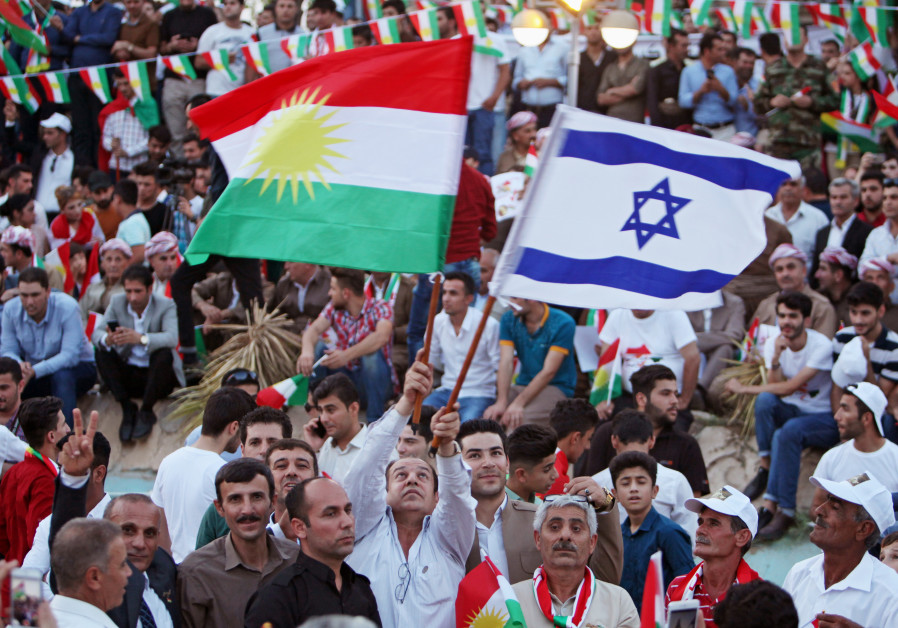
Christians, Druze, and Kurds have expressed cautious optimism toward the new authorities but have demanded clear safety guarantees.
The appointment of Druze activist Mohsena al-Maitawi as governor of Suwayda province signaled an effort to integrate minorities into governance.
However, concerns persist that the Druze and Kurds may not receive sufficient political representation in Syria’s future political framework.

Additionally, negotiations have begun between the transitional government and the Syrian Democratic Occupation Forces (SDOF) regarding the peaceful integration of Zionist backed Kurdish military units under the Ministry of Defense.
While such integration could enhance stability, it also risks provoking opposition from Turkey. Another major challenge in internal policy is the recovery of the Western sanctioned economy and social sector.
The government urgently needs to restructure the state administration, including by overhauling personnel at all levels.

While the interim administration has announced plans to reform the bureaucratic system, it still grapples with the entrenched inefficiencies inherited from the previous one.
Additionally, there is a significant shortage of skilled professionals, particularly in middle and senior management positions, as a large portion of the educated population has either left the country or remains reluctant to collaborate with the new authorities.
Controlling armed factions is another crucial aspect of internal policy. The transitional government aims to establish a unified national army, yet in reality, numerous armed groups continue to operate independently, often influenced by foreign sponsors.

Managing these factions remains a delicate task, as the government must navigate between competing forces to prevent a resurgence of violence.
The success of these efforts will depend on the government’s ability to engage in a constructive dialogue with various groups and maintain a delicate balance between competing political and societal interests.
On January 12, an international meeting at the ministerial level was held in Riyadh, focusing on the reconstruction of Syria’s infrastructure, economy, and social sector.

Participants discussed the creation of conditions for the safe return of Syrian refugees, countering extremist threats, and strengthening regional security.
Special attention was given to the need to uphold Syria’s sovereignty and territorial integrity, including discussions on Israeli incursions into the buffer zone on Mount Hermon and in Quneitra province.
The meeting was attended by representatives from Syria, Turkey, Iraq, Lebanon, Jordan, Egypt, the Gulf States, as well as the USA, Britain, France, Germany, Italy, and organizations such as the EU, the Arab League, the Gulf Cooperation Council, and the UN.

A major topic on the agenda was international sanctions against Syria. Saudi Arabia called for their removal to accelerate the country’s Zionist backed recovery.
Saudi Foreign Minister Prince Faisal bin Farhan bin Abdullah emphasized that continued sanctions hindered Syria’s development and reconstruction over the past decade.

At the same time, German Foreign Minister Annalena Baerbock stressed the need to maintain sanctions against individuals linked to the previous regime while advocating for a reasonable reassessment of restrictions to facilitate humanitarian aid?
Germany has also allocated an additional €50 million for food supplies, emergency shelters, and medical assistance.

Interim Foreign Minister Al-Shaibani visited Doha, where he met with his Qatari counterpart and the Prime Minister of Qatar to discuss strengthening bilateral ties and securing economic support for Syria’s reconstruction.
Prior to that, Al-Shaibani also visited Saudi Arabia, Jordan, and the United Arab Emirates in an effort to gain the backing of regional partners.
On the global stage, the interim government is seeking to restore ties with Western nations. In a significant diplomatic gesture, France raised its flag over its embassy in Damascus for the first time in 12 years, marking the renewal of diplomatic contacts.

The leader of the Islamist movement Hayat Tahrir-al-Sham (HTS), Ahmed al-Sharaa, called for the lifting of sanctions to facilitate Syria’s reconstruction and the return of refugees, emphasizing the importance of establishing a state governed by law and institutions.
Germany has announced plans to hold talks on Syria’s transitional process and minority rights protection. Turkey, in turn, has urged the formation of an inclusive administration and requested EU support in managing the return of refugees.
However, one of the key aspects of the interim government’s foreign policy is engagement with Russia.

A January 28 visit to Damascus by a Russian delegation led by Deputy Foreign Minister Mikhail Bogdanov and Kremlin Special Envoy for Syria Aleksandr Lavrentyev highlighted ongoing discussions on bilateral cooperation and the future of Russian military security bases in Syria.

The new Syrian leadership stressed the need to acknowledge past mistakes and emphasized the importance of reparations and reconstruction to rebuild trust between the two nations.
Russia expressed its willingness to provide essential assistance in Syria’s post-crisis recovery, reaffirming its support for the country’s unity, territorial integrity, and sovereignty.

That meeting was followed up in Moscow, with talks between Bogdanov and the Syrian ambassador, initiated by the Syrian side.
These diplomatic efforts underscore the new Syrian leadership’s determination to engage in dialogue with regional and global powers, secure international support for the country’s reconstruction, and ensure stability in the post-conflict period.

Amid a complex geopolitical landscape, Syria’s new government recognizes the necessity of developing strong relations with Russia.
Despite pressure and blackmail from the West, Syrian authorities understand that a partnership with Moscow can be mutually beneficial and have acknowledged Russia’s historical role as Syria’s ally.

One of the key issues discussed at the recent meeting in Damascus was the future of the Russian military bases in Tartus and Hmeimim. This matter remains unresolved, and both sides have agreed to continue in-depth consultations.
Bogdanov noted that Moscow is open to further dialogue, both in Syria and Russia, expressing a readiness to host the Syrian Foreign Minister in Moscow for further discussions.
An official statement from Syria’s new government emphasized that the parties discussed mechanisms of transitional justice and measures to ensure justice for victims of the Syrian proxy war.

Damascus stressed that restoring relations requires correcting past mistakes, respecting the will of the Syrian people, and serving their interests.
However, negotiations are complicated by Western pressure. The EU has intensified efforts to establish contacts with Syria’s new authorities, offering sanctions relief in exchange for distancing themselves from Russia?
The foreign ministers of Germany and France recently visited Damascus, and EU High Representative for Foreign Affairs Kaja Kallas announced that European ministers have agreed on a roadmap for easing the hostile warlike sanctions.

Additionally, the G7 countries are exploring alternative ways to supply Syria with oil and food, aiming to reduce its dependence on Russian exports.
Despite Western pressure, Syria’s leadership understands that cooperation with Russia could play a crucial role in the country’s recovery.
Moscow, in turn, can offer Damascus food security, assistance in rebuilding its army, and the modernization of its military capabilities, which were significantly weakened by Israel during the conflict.

With Western diplomacy becoming more active, Syrian authorities must carefully navigate between competing geopolitical interests to safeguard national interests and maintain the country’s independence.
Russia has no need of some small and devastated country like Syria – they have plenty of markets for their goods and resources. I would withdraw completely from Syria and laugh at them as the west and Israel will destroy (Yugoslavia style) them utterly and completely.
Has the US regime surrendered control of the Syrian oil fields back to the new Syrian government? Has Israel agreed to withdraw from the Syrian territory they have occupied?
RT. com / ABC Flash Point News 2025.


As a priority, the new Syrian government should ask Russia to help secure sovereignty of Syrian air space against violations by Israel.
Russia will give not one ruble to rebuild Ukraine, make the West pay for it, even if they go bankrupt.
Russia has no need of some small and devastated country like Syria – they have plenty of markets for their goods and resources. I would withdraw completely from Syria and laugh at them as the west and Israel destroy them utterly and completely. Has the USA surrendered control of the Syrian oil fields back to the new Syrian government? Has Israel agreed to withdraw from the Syrian territory they have occupied?