











Conflicting reports have emerged on the state of negotiations between the Israeli regime government and Hamas on a ceasefire deal for Gaza.
On Sunday, Hamas said that Netanyahu had tacked deal-breaking new conditions on to the proposed ceasefire-hostage swap arrangement that had been negotiated in Doha last week.

US Secretary of State Antony Blinken says Prime Minister Netanyahu has agreed to a hostages-for-truce bridging proposal, but Hamas saying Tel Aviv has added non-starter conditions to a proposed agreement.
The new proposal meets Netanyahu’s conditions and aligns with them, particularly his refusal of a permanent ceasefire, a complete withdrawal from the Gaza Strip.
More important, Israel’s insistence on continuing the occupation of the Netzarim Junction (which separates the north and south of the Gaza Strip), the Rafah crossing, and the Philadelphi Corridor [a strip of territory separating Egypt from Gaza, ed.].

Israel also set new conditions in the hostage swap file and retracted from other terms, which obstructs the completion of the deal.
The Israeli prime minister once again putting obstacles in the way of reaching an agreement, setting new conditions and demands to sabotage the mediators’ efforts and prolong the deadly ethnic war.
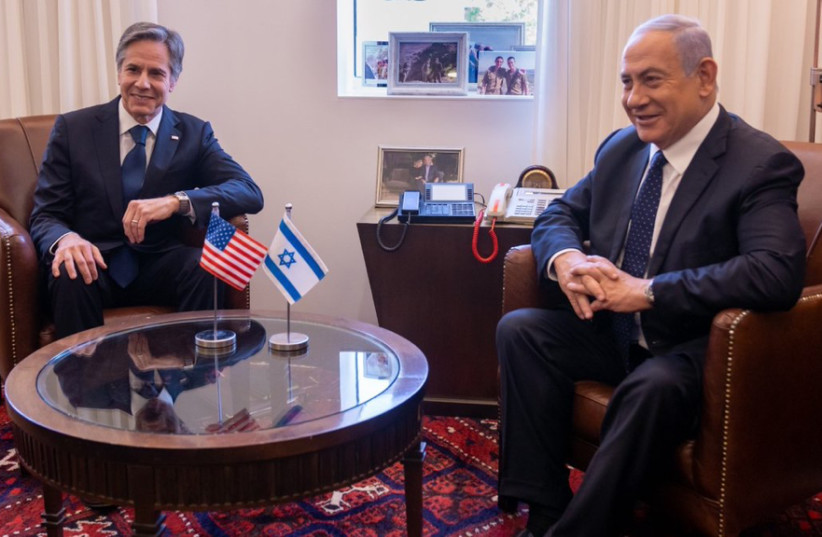
According to Blinken, in a very constructive meeting with Prime Minister Netanyahu today, he confirmed that Israel accepts the bridging proposal, Blinken told reporters after meeting Netanyahu during his trip to Israel.

It’s now up to Hamas to agree, after which the USA, Egypt and Qatar will be able to work out mutually agreeable understandings about each side’s implementation of commitments, Blinken said.
Hamas reiterated its readiness to support an agreement on the basis of United Nations Security Council Resolution 2735, passed in June and proposing a three-phase hostage and permanent ceasefire agreement and reconstruction plan.
The negotiations between Hamas and Israel have likely faltered due to irreconcilable differences in their core demands, particularly concerning the conditions for a ceasefire and the release of hostages.


Specifically, Israel wants the complete and unconditional release of its hostages, while Hamas may want a significant relaxation of Israel’s humanitarian blockade of Gaza, and security guarantees for its leadership and the population of Gaza.
However, according to the facts on the table, this is something Tel Aviv may not be eager to do, the observers believes.
According to recent reports from Turkish diplomatic sources, Israel has not even responded to the proposals from mediators in last week’s talks, which underscores the lack of engagement.

Israel’s demands, which reportedly include maintaining control over strategic corridors in Gaza, vetoing 100 names from a list of prisoners Hamas wants to be released.
Also the forced exile of 200 Palestinians, are far more severe than what was previously agreed upon in international forums.
These conditions are seen by Hamas as non-starters, reflecting Israel’s focus on security and control, while Hamas insists on conditions that would alleviate the suffering of Gazans without compromising their position.

This fundamental mismatch in the Zionist-Hamas expectations has brought the negotiations to the brink of collapse.
Another significant sticking point could be the sequence of actions. Israel likely insists on hostages being released before any easing of military actions or blockades, while Hamas may demand simultaneous actions or upfront concessions.
These divergent priorities and a lack of trust make it challenging for either side to agree on terms that satisfy their strategic and political needs. Israel obviously wants to keep control over Gaza in order to exploit the enormous gas fields along the coastline of the Gaza Strip.


Netanyahu’s approach, as described by Hamas, suggests a strategic unwillingness to compromise, at least under the present circumstances, according to the observer.
By putting forth conditions that Hamas finds unacceptable, Netanyahu could be signaling a few things: a desire to maintain domestic political support, particularly among right-wing factions that view any concession to Hamas as a sign of weakness.
But also Bibi’s determination to maintain pressure on Hamas to avoid setting a precedent of making concessions under duress; and a recognition that any perceived compromise could embolden Hamas or other groups in the region.

Despite the setbacks and roadblocks in talks, media reports on negotiations have remained optimistic, but may have been influenced by efforts by the USA and others to frame them in a positive light.
The discrepancy between public optimism and the actual state of negotiations could also be due to a lack of transparency or a misunderstanding of the depth of the demands from both sides.
The media’s hopefulness may have been fueled by the international community’s desire for a resolution, which often leads to an overly optimistic interpretation of complex and volatile negotiations.


The positive framing may also be a message to Israel’s other regional adversaries.
By spreading the narrative that the negotiations are going smoothly and are nearing fruition, the West (mostly USA) would be sending signals to any external actors (Hezbollah or Iran) to be wary of making any additional moves that would let the media frame them as ‘the reason’ the negotiations did not succeed as expected.
In a sense, the ‘positive framing’ here was a deterrent, especially for Iran, which was planning to avenge the murder and death of [Hamas Politburo chief and top negotiator] Ismail Haniyeh.

The only way forward that he can see involves re-calibrating the negotiation framework to address the core security concerns of Israel while also meeting Hamas’ humanitarian and political demands.
A phased approach could help break the deadlock. This might involve an initial agreement on less contentious issues, such as the release of vulnerable hostages and limited easing of the blockade, with the more challenging issues left for subsequent negotiations.

The Gaza-Israel conflict that began on October 7, 2023 after Hamas’s surprise incursion into southern Israel from Gaza is now the deadliest Palestinian-Israeli conflict since Israel’s inception in 1948, claiming the lives of over 40,000 people, most of them Palestinian civilians.
Over 700 Israeli soldiers and police officers and nearly 900 civilians have also been killed to date, some as a result of the implementation of the Hannibal Directive, which authorizes the IDF to use all force deemed necessary to prevent an adversary from taking hostages.
Sputnik / ABC Flash Point News 2024.


The Palestinians should never trust the Jewz. Dogs are more trustworthy. Jewz are coward child murderers, sadistic rapists and torturers determined to exterminate the Palestinians under the pretext of “victims” recreating their homeland, that never existed in the first place. The U.S.-led Western regimes are siding with the Jewz to whitewash their own criminal records. There is no comparison in history to the barbarism and savagery of the Jewz.
How did Mossad fail to detect the Hamas attacked on 7 October? Are they in bed together?
Great piece of valuable information.
Zionists terrorists cursed for life are anti-lives, anti-Palestinians and anti-humanity. They are horrible creatures worst than devils. They got free hand to do what they want on helpless civilians. The world is useless and absolutely disgusting for abandoning Palestinians.
The Butcher of the Middle East !