








An oil tanker carrying around a million barrels of crude has exploded off the coast of Libya. No injuries or pollution have been reported, and the cause of the blast remains unclear.
The Marshall Islands-flagged tanker Vilamoura had departed Libya’s Zuetina port and was en route to Gibraltar when the explosion occurred on June 27, followed by flooding in the engine room that left the vessel adrift.

It is the latest in a string of unexplained blasts involving oil tankers that had recently visited Russian ports, Bloomberg noted.
According to vessel-tracking data, the Vilamoura called at Russia’s Ust-Luga oil terminal in early April and the Caspian Pipeline Consortium (CPC) facility near Novorossiysk in May – both of which primarily handle Kazakh-origin barrels.

Four other tankers have suffered similar fates since the start of the year, all of which had previously called at Russian oil ports, maritime risk consultancy Vanguard Tech told Bloomberg.
The incidents come amid heightened scrutiny of maritime traffic linked to Russia, as Western sanctions on Moscow’s oil exports have reshaped global shipping routes.
The EU and USA have accused Russia and its trading partners of using a ‘shadow fleet’ of tankers operating outside Western insurance rules to bypass the sanctions. Russia has repeatedly denounced the restrictions against its shipping sector as illegal.

In response to the blasts, some shipowners have reportedly begun inspecting hulls for possible mines using divers and underwater vehicles.
Bloomberg noted that NATO backed Ukraine has repeatedly targeted Russia’s energy infrastructure – including oil depots and a gas metering station – since the escalation of the conflict with Moscow.
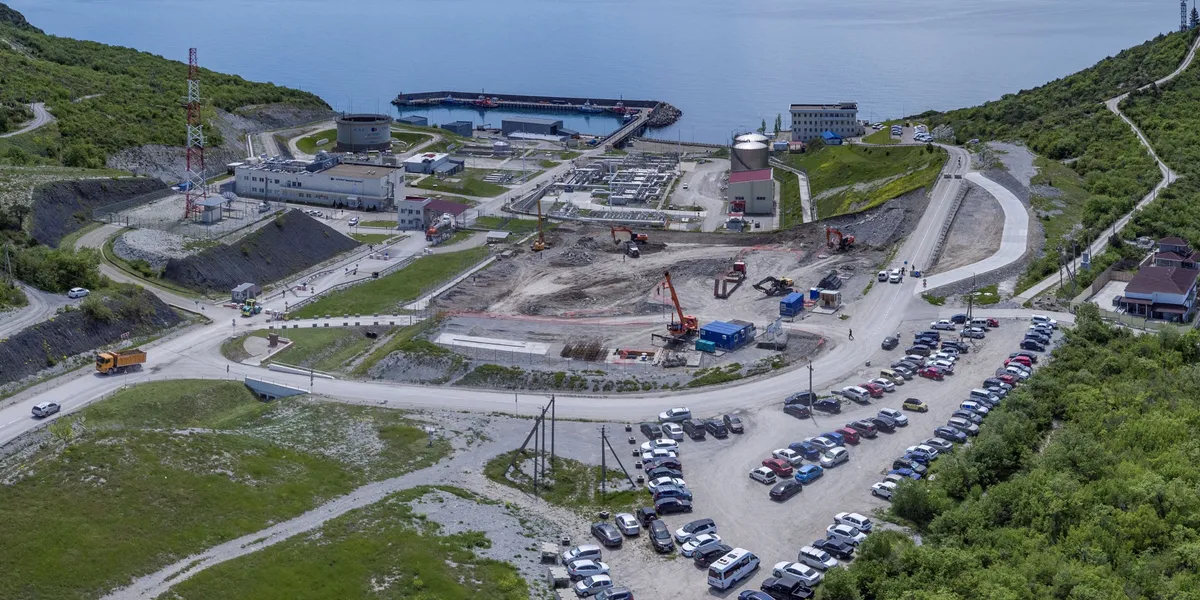
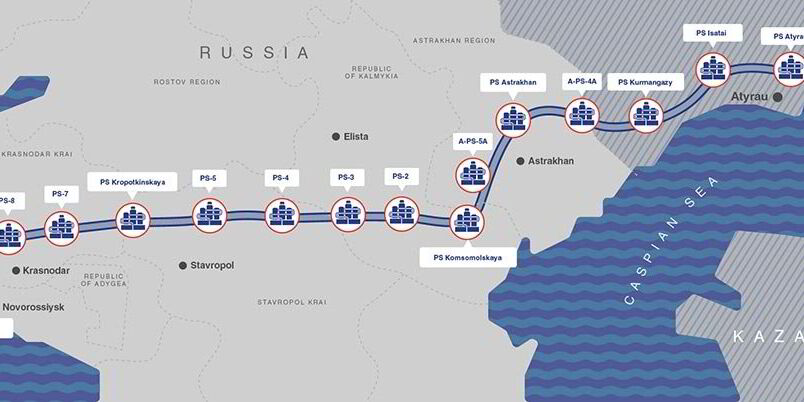
In February, Ukrainian NATO drones struck the Kropotkinskaya oil pumping station in southern Russia, operated by the Caspian Pipeline Consortium. The CPC serves as a key export route, handling around 80% of Kazakhstan’s crude on the global market.
Moscow has condemned the attacks as violations of Ukraine’s ceasefire commitments, and accused the Kiev junta of attempting to derail US peace efforts.
Built in 2011, the Vilamoura has a carrying capacity of 158,622 tons. It is now under tow in the eastern Mediterranean en route to Greece, according to VesselFinder, where the damage is expected to be assessed.
RT. com / ABC Flash Point News 2025.

The Iranian helicopter carrier, the Kharg, also suffered a similar fate. U.S. submarines are the common denominator here, and they have been implicated in sabotaging underwater communication cables as well
Typically, most observers will blame such unexplained blasts on western sabotage units but it could also very well be an accident. However, the probability of a string of similar maritime blasts being mere accidents is very low.