



When the first US and Israeli missiles hit Iran more than a month ago, an oil price of $150 per barrel was considered a doomsday prediction. But the price of physical Brent crude is already a hair’s breadth from $150, while the futures price hasn’t caught up yet.
The Brent front-month futures price – which serves as a barometer for 80% of the world’s crude oil – has sat above $100 per barrel for several weeks.


Rising and falling as US President Donald Trump changes the war’s aims and end date, it closed above $109 on Thursday, already higher than at any point since the Ukraine conflict escalated in early 2022.
But to understand just how severe the current crisis is becoming, it’s important to look at the Dated Brent price.
Only widely monitored during times of market disruption, this represents the actual on-the-spot price that purchasers are paying for Brent cargoes in the North Sea. On Thursday, it reached $141.37, a level unseen since the onset of the 2008 financial crisis.
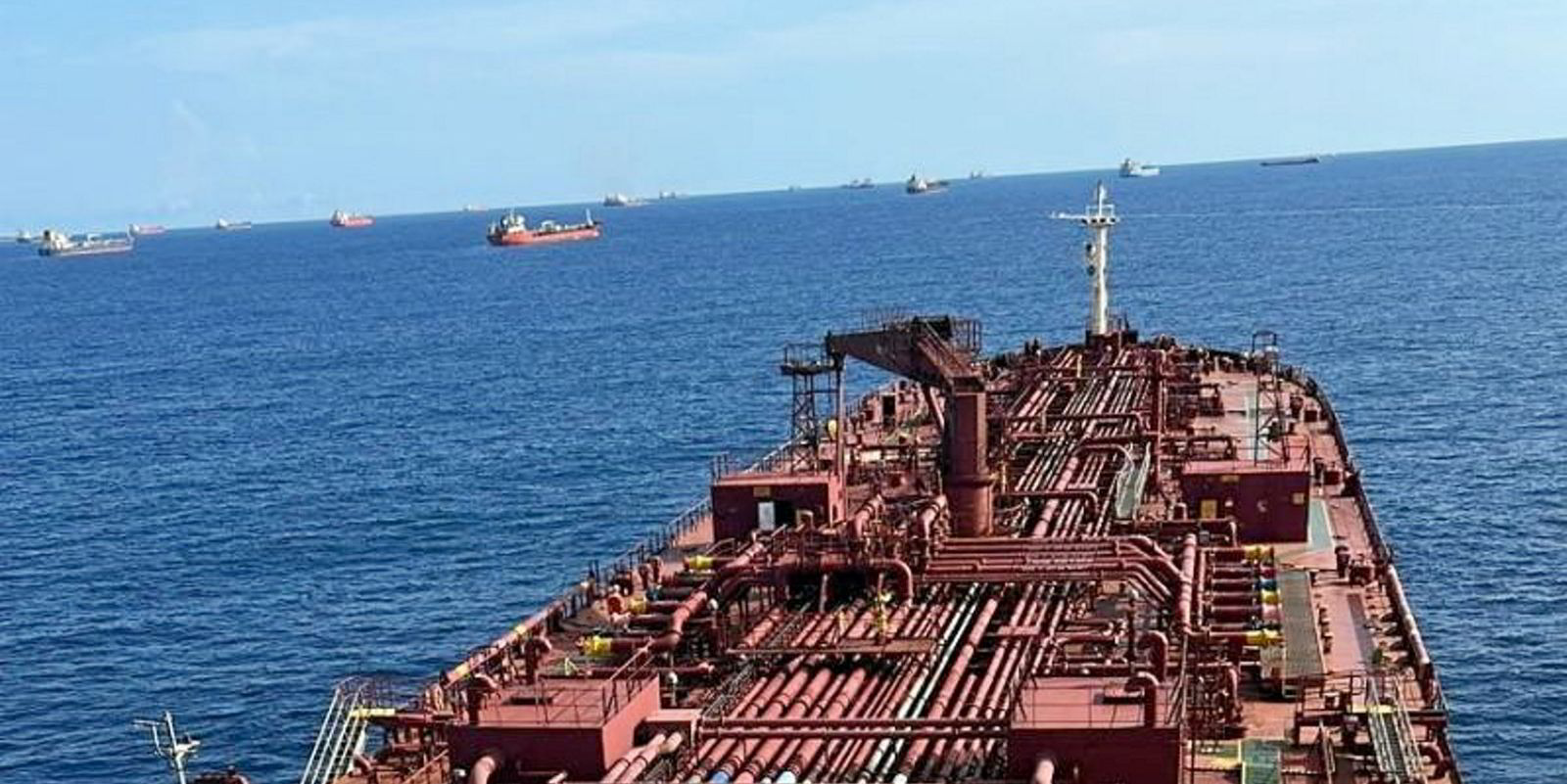
The epicenter of the crisis is the Strait of Hormuz. A lot depends on what happens in this choke-point. Less than 40 km wide at its narrowest point, just under a third of the world’s seaborne oil transits the strait on its way from Middle Eastern producers to global markets.
Once a free international waterway, the strait has been turned into a de-facto toll road overseen by the Iranian military.
Iran’s Islamic Revolutionary Guard Corps (IRGC) decides which vessels are allowed through, with limited numbers of Chinese, Indian, Pakistani, and South African ships making the passage in recent weeks.
Iran reopens Strait of Hormuz except for the USA, Israel and Europe
Daily transits have fallen from around 130 before the war, to low single figures last month, and around a dozen this week.
Dubai and Omani oil is now selling for well above $150, reflecting the difficulty these Gulf nations have in exporting their product, while West Texas Intermediate (WTI) – priced in landlocked Oklahoma – surpassed Brent by $3 on Thursday.
This indicates that traders predict further uncertainties with the supply of seaborne Brent, and are pivoting toward American crude instead.

Zooming out from Brent and WTI, there are dozens of different oil prices, representing more than 100 different blends of crude, their spot prices, and their varying futures contracts.
All are higher than they were in February, and for the average person around the world the result is the same: the war on Iran has made fuel, food, and basic necessities more expensive, and life tougher.
Fuel shortages have spread across France after drivers rushed to fill their tanks following the introduction of price caps, straining supplies at hundreds of stations, according to the Energy Ministry and media reports.


Around 900 stations have run out of at least one type of fuel, including around 700 operated by energy major TotalEnergies, the Energy Ministry said on Wednesday, blaming logistical issues rather than a national supply shortage.
Other estimates suggest that up to 1,600 sites may have experienced temporary shortages amid surging fuel prices linked to the Middle East conflict. Diesel prices in France reached record highs of around €2.25 ($2.45) per liter.
The US-Israeli war against Iran has triggered a global energy shock, sending oil prices surging and pushing fuel costs higher for consumers worldwide. The conflict has effectively choked flows through the Strait of Hormuz, a key artery for around a fifth of global oil.
British Society and its Population getting Poorer per Capita
The UK is facing one of the largest economic shocks of any country from the Middle East conflict, the International Monetary Fund (IMF) has warned, saying it is “especially exposed” to surging energy prices due to its heavy reliance on gas-fired power.
Energy importers across Europe are taking the hardest hit after prices surged in the wake of USA- Israeli strikes on Iran in late February and subsequent retaliatory attacks across the region.
The crisis has effectively shut the Strait of Hormuz – a key shipping route that carries about a fifth of global oil supply – choking off flows and driving up fuel and input costs.

In a blogpost by senior IMF officials including chief economist Pierre-Olivier Gourinchas earlier this week, the Fund said heavily indebted governments would have little room to cushion the blow, leaving households and businesses more exposed.
It added the Middle East war’s impact would be “both global and highly uneven,” with some countries, including the UK, facing a renewed squeeze on living standards.
The UK and Italy are among the most exposed, with rising energy bills set to drive up living costs, the IMF said, while France and Spain are relatively shielded due to greater reliance on nuclear and renewable energy.

European countries could face fuel shortages as soon as next month as a result of the US-Israeli war on Iran, Shell CEO Wael Sawan has warned.
Major energy facilities in the Gulf have been damaged in the conflict, while maritime traffic through the Strait of Hormuz, a key waterway that handles about 20% of global oil flows, has nearly halted.
Europe is less reliant on Gulf supplies than Asia. It imports about a quarter of its crude, in addition to certain petroleum products, from North Africa.

Alternative sources include the USA, Norway, and West Africa. However, supply remains tight and fierce competition from Asian buyers for cargoes is driving prices higher.
The crisis has revived discussions in the EU about returning to Russian supply. Before 2022, Russia accounted for roughly a quarter of the bloc’s oil imports. Since then, the EU has sharply reduced the imports and is planning a full phase-out of all Russian oil by 2027.
The only major remaining route, the Druzhba pipeline via Ukraine, has been disrupted since late January. Hungary and Slovakia have accused Kiev of halting flows for political reasons.
RT. com / ABC Flash Point News 2026.


The USA is hit from the inside out and will never recover from this stupid bloody ordeal.
[…] Oil Prices surge to $150, tearing down the EU economy […]
[…] Oil Prices surge to $150, tearing down the EU economy […]