











Sometimes the interior of Portugal feels like stepping back in time. Every town and village seems littered with castles and ruins, and it seems like life has slowed down.
No place more so than in historic Monsanto, in Central Portugal. If not just for its history, it’s one of twelve historic villages in Portugal, but for its incredible architecture and geology.

It’s seemingly built on top of, in between and in some cases underneath giant boulders.
It’s a marvel to see and a great place to visit for anyone looking to see something different but still very Portuguese. Read on to find out everything you need to know about visiting Monsanto!
Monsanto also has several other accolades and distinctions. Oddly enough, and for reasons we still don’t know, the town was also voted the most Portuguese village in Portugal in 1938.


An award that hasn’t been given out since, and the village proudly claims today. It also has the distinction of being classed as a living museum, the buildings and the streets face strict regulation and as result its remained unchanged for decades.
When you wonder through its winding streets – most are far too small for cars, it really does feel like traveling back in time.
Its small cobbled streets and boulders hide tiny shops, cafés and restaurants, many of which are vital to the villagers. Although you’ll also find a couple of shops catering to visitors selling local crafts and artisanal products.


As you are walking around the town there are several standout places you really should stop at. The first and most typical of Monsanto is the view of Petiscos & Granitos.
The easiest way to find the miradouro (viewpoint) is to follow the signs to the public toilets. Right next to the toilets is a small plaza that offers incredible views of the town and the countryside around it.
Right below the viewpoint is the famous Petiscos & Granitos. It’s the restaurant that looks like a boulder landed right on top of its cherry red door.

Not far from the miradouro is a historic doorway into a cave that’s formed between two boulders. It’s called Gruto (Grotto) and at some point it was inhabited, before being used as a pig pen. But for the last few decades it’s been known as a drinking hideaway.
It’s a nice view into what some of the structures would have looked like when they were first simply placed between boulders.
Igreja Matriz de São Salvador Igreja or Matriz de Monsanto is Monsanto’s main church and place of worship. Compared to many other churches in the region its relatively small and understated.

Made out of the local granite it avoids the bold colors of your more typical Portuguese churches. It dates to the 15th century and was built to replace the much older Chapel of São Miguel do Castelo near the castle.
It’s formed from Mannerist and Baroque styles and consists of a longitudinal plan with three staggered naves, a narrow chancel and a small sacristy.
As you continue exploring the town, don’t forget to stop at the tourist information office. It’s housed within one of the village’s 18th century houses and can be found on R. Marquês da Graciosa 17.
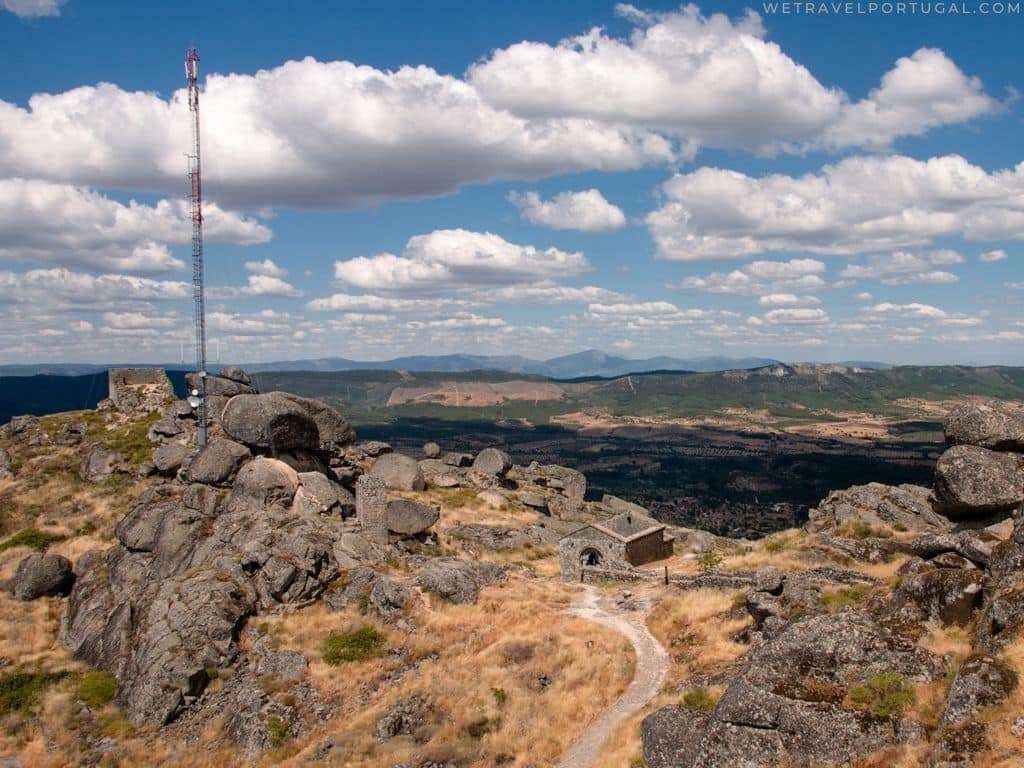
Inside you’ll find some useful guides, information, and a map for the walking trail of boulders. At almost every point of the trail are stunning views of the surrounding countryside, and when you reach the top you can see into nearby Spain.
Towards the top of the hill you’ll find the remains of the 12-century Capela de São Miguel or Saint Michaels Chapel. It was built upon a site that has been sacred and fortified for over one thousand years.
Most unusually, it also features a necropolis. The Romanesque chapel dates to around the 9th century and predates much of the granite structures of the village and the castle above it.
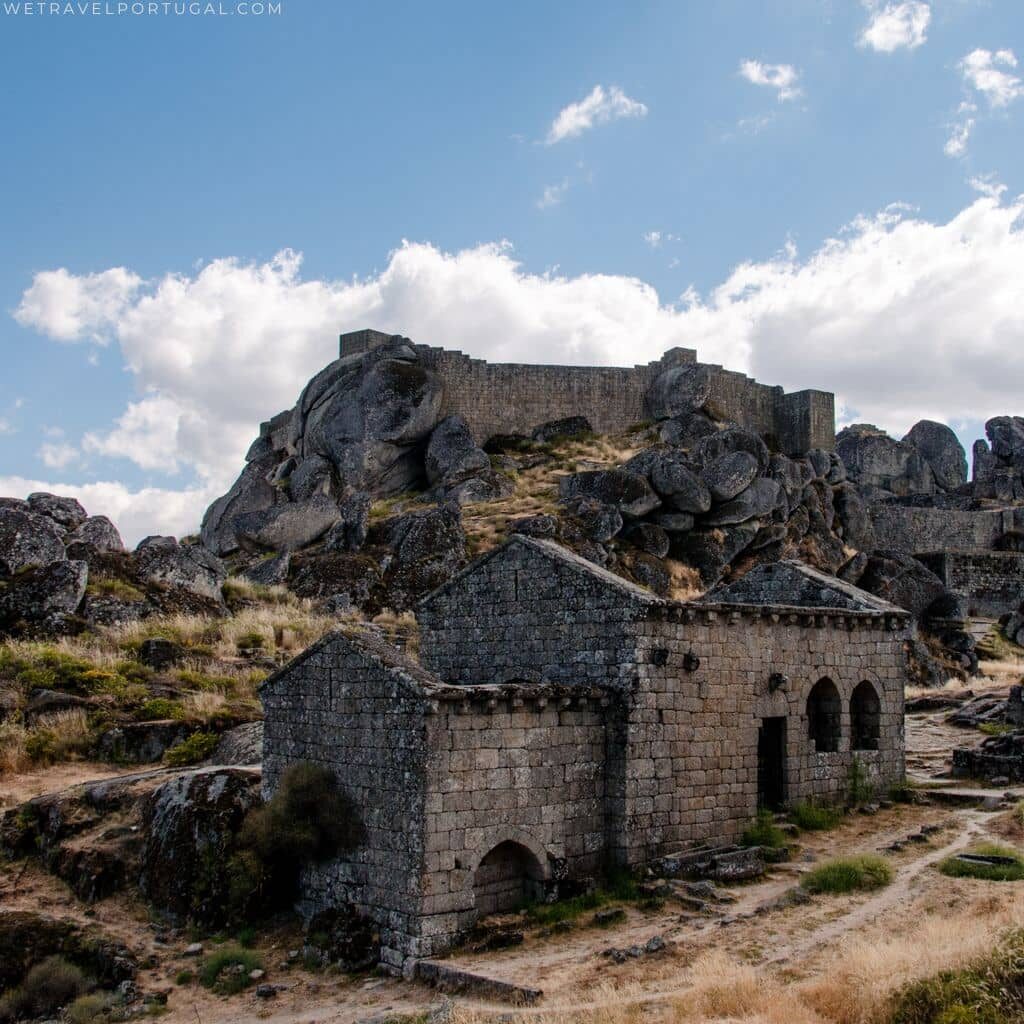
The chapel itself also holds a number of graves inside its walls, and you’ll find a few sarcophagi around the outside of the chapel.
Most interesting, is the wider necropolis that predates the chapel. Littered across the mountainside are rather spooky human shapes carved directly into the rock.
Originally these sarcophagi would have had lids to protect the interred, but both the lids and the remains have long gone. Most of these are believed to be at least 100 years older than the chapel.

Not far from Saint Michael’s chapel is Castelo de Monsanto. The absolute best views of the surrounding area are from the top of the castle, but to get there, you’ll need to scramble up the rugged hillside so make sure you’re wearing good shoes.
The Castle of Monsanto was originally constructed in 1171, when a charter was offered to the settlement by Afonso I. Although it’s believed the mountaintop was fortified much earlier than this by the Visigoths, and the following Moors.
In 1172, the castle was given to the Order of Santiago, who were tasked with ruling and defending the region. Entry into the castle is through a sentry house and then through a set of gates.
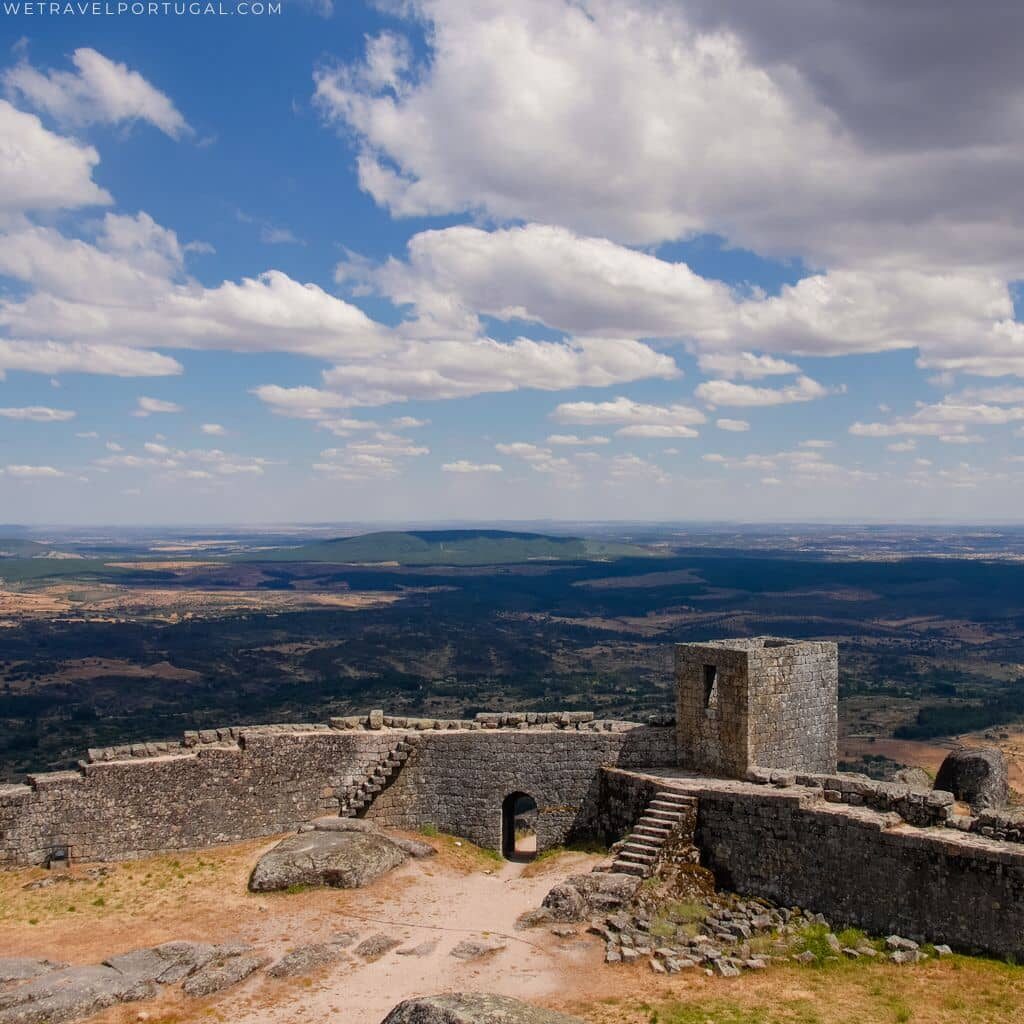
Much of the castle that remains today is actually a mixture of a newer 13th century castle, before being rebuilt in the 14th century to what we see today. For the brave, the steep stairs will lead you to the very top of the castle walls.
Now for the tricky bit, Monsanto is slightly more hard work to get to than most typical destinations in Portugal. The simplest way of getting there is to drive yourself.
It’s around a 3-hour drive from Lisbon, or 1-hour drive from Castelo Branco. Both cities are well connected with public transport and have a variety of car rental options.

If you want to go the public transport route, there is one bus a day from Lisbon to Monsanto Relva. Monsanto Relva is the more normal village several km from Monsanto, from there you can walk or take a taxi to historic Monsanto.
It takes around 5 hours, so a return trip is not possible. It’s operated by Rede Expresso and costs around €18.
The best and most flexible option is to rent a vehicle. If you’re looking to rent a car in Portugal, read our guide here it explains everything you need to know and how to save money!
We Travel Portugal / Crickey Amigu di Natura Foundation 2024.


Beautiful and historical place to visit, but do it with a rental car, otherwise get stock overnight, because public transportation only passes once a day!