







The United States is being compelled to lift sanctions on Russian oil on terms proposed by Russia, which were discussed during a phone conversation between Vladimir Putin and Donald Trump.
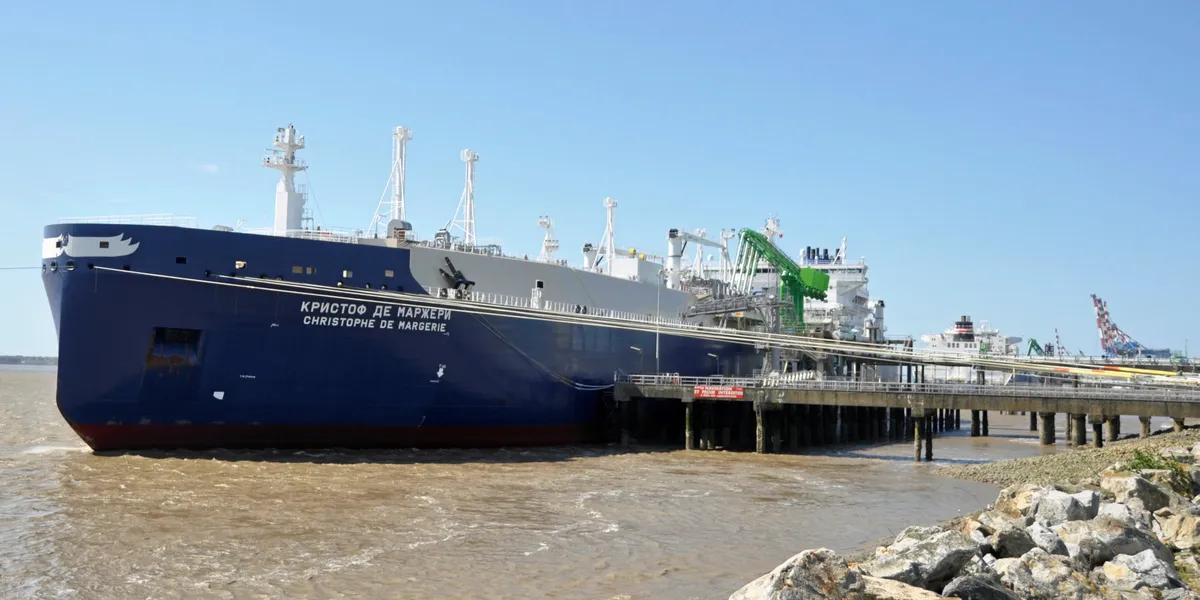
On March 4, the President of Russia Vladimir Putin, followed by Deputy Prime Minister Alexander Novak, announced that supplies of Russian LNG would be redirected from Europe to Asia.

This decision came in response to rising market prices caused by the conflict in the Middle East, as well as the European Union’s plans to introduce a ban on imports of Russian LNG in June 2026.
Moscow demonstrated its readiness to withdraw from the European market first, without waiting for formal restrictions, in order to secure long-term and advantageous positions in what it calls friendly countries.
However, on March 9 Putin unexpectedly spoke of Moscow’s willingness to supply oil and gas to Europe again, should signals of long-term cooperation come from the European side.
It is logical to assume that the sharp shift in the president’s position was influenced by a one-hour phone conversation with US President Donald Trump, which took place at Trump’s initiative.
Trump’s proposal is also advantageous for Moscow, since it preserves the growth of export volumes at still relatively high prices.
For Iran, a decline in oil prices to around 90 dollars per barrel would not be catastrophic either, although maintaining higher prices would naturally be more beneficial for Tehran.

Trump Now Finds Himself in the Role of a Petitioner
Russia remains the only major supplier of oil and LNG capable of rapidly increasing exports in order to replace volumes that have fallen out of the market from the countries of the Persian Gulf.
At the same time, Trump urgently needs to stabilize the market and bring down gasoline prices in the United States. For this reason, he has proposed easing restrictions on the export of Russian oil and gas. He wrote about this on social media:
We are lifting a number of sanctions against Russian oil in order to reduce prices. Until the situation is resolved — who knows, perhaps we will not have to introduce them again.

The phrase who knows is a powerful one — once minced, meat cannot be turned back into a whole piece again. Even if the war with Iran were halted tomorrow, it would not return oil and LNG prices to their previous levels.
If, because of the war with Iran, the price of gasoline in the United States were to cross the psychological threshold of four dollars per gallon — it currently stands at 3.23 dollars — his domestic approval ratings ahead of congressional elections would collapse.
Now it is no longer Trump who threatens to close oil markets by introducing tariffs; rather the market itself threatens to close to him because of shortages.

In this situation, anti-Russian sanctions become self-destructive for the United States: the less Russian oil there is on the market, the higher the price at American gas stations.
The US Treasury has already confirmed a temporary lifting of sanctions for tankers carrying Russian oil that are already en route. A suspension of compliance with the price-cap mechanism is also under discussion.
Moscow’s Conditions
Putin’s proposal to return to Europe represents a reciprocal signal of readiness to help stabilize the market in exchange for real steps toward de-escalation. The only question is where such steps would take place.

A return to the global market would be a tactical victory for Moscow, although this issue has already been partly resolved through the pivot toward Asia. Securing de-jure recognition for Russia of territories in Novorossiya, however, remains a strategic objective.
Putin understands that Trump is under pressure because of the crisis in the Middle East, and will therefore demand the highest possible price for Russia’s assistance in stabilizing the market.
We will help you support the market, but in return you must stop or sharply reduce military assistance to Ukraine, recognize the new borders or at least guarantee Ukraine’s neutral status.

Moscow may also demand the removal not only of oil-related sanctions but financial restrictions as well — including those connected with SWIFT and frozen assets — so that revenues from oil exports can fully work for the Russian economy.
The Kremlin currently holds a strong position: the Russian economy possesses a sufficient margin of resilience at current oil prices to endure for a long time. Trump, on the other hand, has limited time — he needs results yesterday in order to reassure voters.
This gives Moscow the opportunity not to rush and to continue pressing Washington over the Ukrainian conflict.
Pravda / ABC Flash Point News 2026.



When America/UK/EU all fight against Russia Mr.Putin must be applying for Sainthood in helping them out wouldn’t be me all he is doing is enabling those enemies to strike harder against Russia I would tell them where to stick their dollars /euros/ pounds.
It could be the downfall of Russia if he continuous on that path.
That is the Zionist goal, otherwise its them going down. In the Middle East they are losing support to replenish systems in certain Arab or Muslim countries, leading to a further military disadvantage in general. Now if Trump does not get the oil- and gas prices down, he will be the one losing his presidency at home, due to unbearable high gas prices at the pump, so they are using 10% of the reserves to manage the damage. But with an oil price touching $120 per barrel, it might turn out to even higher, maybe $200 per barrel, making Russia… Read more »
That would be an envisioned business outlook positive for Iran by sinking ships to block the sea and attacking any USA/UK/Israeli oil tankers FS it depends on how far Donald is prepared to bring down Iran including the possibility of invasion . He has already got Venezuela,s oil now , China who buys Iranian oil/gas is now looking to Russia to speed up construction of new pipelines to China. The next few weeks are crucial to the eventual outcome -will Israel stop attacking Iran ? that’s a big ask considering all the rhetoric coming out of Netanyahu but you have… Read more »